

FAQs
Welcome to GB Trek & Tours
What is the best time for apricot blossoms in Hunza?
The window is narrow and altitude dependent.
-
-
Best Window: March 20th to April 20th.
-
The Wave: Blossoms start in Lower Hunza (Gilgit and Karimabad) around mid-March and move north toward Upper Hunza (Gojal, Gulmit, and Passu) by the first week of April.
-
Tip: If you arrive in early April, you can catch the tail end of the pink blossoms in the south and the peak white/pink blooms in the north.
-
What camera gear should I bring to Pakistan?
Essential Camera Gear
Lenses: * Ultra-wide (16-35mm): Essential for the massive scale of Rakaposhi and the Passu Cones.
Telephoto (70-200mm or 100-400mm): Crucial for “compressing” mountain peaks and capturing candid portraits from a respectful distance.
-
-
Filters: A Circular Polarizer is non-negotiable to manage the harsh high-altitude glare and deep blue skies.
-
Power: Bring 3–4 spare batteries. Cold mountain nights drain them quickly.
-
Storage: High-speed SD cards (at least 256GB total); you will shoot more than you expect.
-
Are flights to Skardu guaranteed?
Flight & Travel Logistics
-
-
Skardu Flights: They are not guaranteed. Flights operate on Visual Flight Rules (VFR), meaning they are cancelled if there is low visibility or heavy cloud cover.
-
The Backup: Always have a 2-day buffer. If flights are cancelled, you will likely drive the Karakoram Highway (KKH), which takes 12–16 hours from Islamabad.
-
Comparison: Flight vs. Road to Skardu
| Feature | Flight (PIA/Airblue) | Road (Karakoram Highway) |
| Travel Time | 1 Hour | 12–16 Hours |
| Reliability | Weather Dependent (50/70%) | High (unless major landslide) |
| View | Aerial (K2, Nanga Parbat) | Riverside, Canyons, Silk Road |
What is the fitness level required?
Fitness & Group Dynamics
-
-
Fitness: Most photography tours are “Soft Adventure.” You should be able to walk 3–5 km on uneven terrain and handle stairs at ancient forts (Altit/Baltit).
-
Solo Travelers: Highly welcomed. Most boutique tours offer “single supplements” for private rooms, but joining a group is safer for logistics and provides immediate subjects for your photos.
-
Can solo travelers join this tour?
On-Tour Experience
-
-
Food: Expect a mix of Pakistani staples (Biryani, Karahi) and local Hunza cuisine (Chapshuro – meat-filled bread, and Mamtu – dumplings). The food is generally mild and organic.
-
Charging: Most hotels in Karimabad and Skardu have 24/7 power, but load shedding (scheduled outages) can occur. Carry a high-capacity power bank (20,000mAh+).
-
What happens if the weather is bad?
Weather Contingency: If the weather turns, itineraries shift to indoor cultural sites (forts, local homes) or lower-altitude valleys where visibility might be better.
What is the food like on the tour?
-
-
Fitness: For a standard photography tour, you need a moderate fitness level. You should be comfortable walking 3–5 km on steep, uneven terrain (like the hike to the Hussaini Suspension Bridge or the Baltit Fort).
-
Solo Travelers: Highly welcomed! Many tours offer “Single Supplements” for private rooms. Traveling in a group is actually recommended for photographers to share the cost of private 4×4 jeeps.
-
Food: Expect organic, hearty meals. Must-tries include Chapshuro (meat-filled crust) and Dowdo (noodle soup). Most tours cater to vegetarians with local lentils (daal) and fresh spinach (saag).
-
Are there charging facilities for camera batteries?
Charging: Hotels in major towns (Karimabad, Skardu) have reliable power, but load shedding (scheduled outages) is common. Bring a 20,000mAh power bank and at least 3 spare camera batteries.
Is Pakistan safe for tourist photographers?
Yes, the Gilgit-Baltistan region is considered very safe for foreigners. However, cultural etiquette is key: Always ask before photographing people (especially women) and never photograph military bridges or checkpoints.
Can I extend my stay in Pakistan?
-
-
Visa Extensions: If you fall in love with the scenery, you can extend your visa while in-country via the NADRA online portal. It typically takes 7–10 days to process, so apply at least two weeks before your current visa expires.
-
Mission
Vision
Mr. Nisar Hussain (Late)
Honor: Medal of Honor (posthumous)
Department: Sports (Mountaineering)
Mr. Nisar Hussain has the unique honor of climbing all the five mountains of Pakistan out of the total fourteen mountains of the world above 8000 meters. In 1996, he accomplished the first feat of climbing the mountain. When you reached Sia Kangri (4227 m). In 1999, he accompanied the Korean team to climb Gasherbrum II (8035 meters). In 2000, he once again accompanied the Korean expedition and reached the summit of Broad Peak. In 2003, he summited Gasherbrum II (8035m) and Gasherbrum I (8065m) in a 24-day period with the Korean Expedition. He was selected by Alpine Club Pakistan for the China-Pakistan joint expedition to summit K-2 (8611 m). He proudly hoisted the national flag of Pakistan on the second major peak of Pakistan. In 2008, he summited Nanga Parbat from the side of Diamer with the German expedition and thus became the third Pakistani mountaineer to climb all Pakistani peaks above 8000 meters. In the summer of 2011, he attempted to climb the urban jump ie Gasherbrum I (8068 m), Gasherbrum II (8035 m) and K2 (6118 m) simultaneously. Formed a team together. He summited both Gashe Gasherbrum II and Gasherbrum I along with other international climbers. With a new route on the south face, he chose to be the first Pakistani to climb this difficult peak in winter, as a partner of Gerfried Goshal in a winter expedition to reach the summit of Kater Brim. He was last seen below the summit of Gator Brim 1 on the fateful day of March 9, 2012, along with Gerfried Goschel and Swiss mountaineer Cedric Pehlen, at twelve o'clock when he was disappeared along with his teammates and later. After a search, he was declared missing near the peak.
In recognition of his outstanding performance in the field of sports (mountaineering), the President of the Islamic Republic of Pakistan has awarded the Tamgha-e-Imtiaz (Posthumously) to the late Mr. Nisar Hussain.

Meet Our Team

Adventure
Guide
Our adventure guides are seasoned experts with years of trekking and climbing experience. They ensure your safety on every trail while sharing fascinating insights about the region’s culture, history, and landscapes.
Kazim
Managing Director
The expedition coordinator meticulously plans and organizes every aspect of your journey, from route selection to logistics. Their attention to detail ensures a seamless and enjoyable adventure for every traveler.
Murtaza Faraz
Tour Specialist
Our tour specialists design custom itineraries tailored to your preferences. Whether it’s exploring hidden valleys or indulging in cultural experiences, they ensure your trip is truly unforgettable.
Jaffar Iqbal
Safety Officer
Dedicated to ensuring your well-being, the safety officer oversees all safety protocols during treks and climbs. Equipped with advanced training, they are prepared to handle emergencies with professionalism and care.
Testimonials
What Our Adventurers Say
An experience I will never forget in my lifetime. From the very moment we set out for K2 last year, everything was impeccably organized. The guides were not just experts; with profound knowledge and genuine warmth, they kept us safe while continuously inspiring us. The instant I stood on the summit, with the sound of the wind intertwining with the sparkle of ice, etched itself deeper into my soul than any video piece or installation I’ve ever created. - Shen Shaomin, Japanese Cross-media artist
This was hands down the best holiday I've ever had. I joined the guided expedition, and it exceeded all expectations. The itinerary was well thought out, with enough time to truly appreciate each location. The team's attention to detail made the whole trip smooth and enjoyable. Already planning my next adventure with them!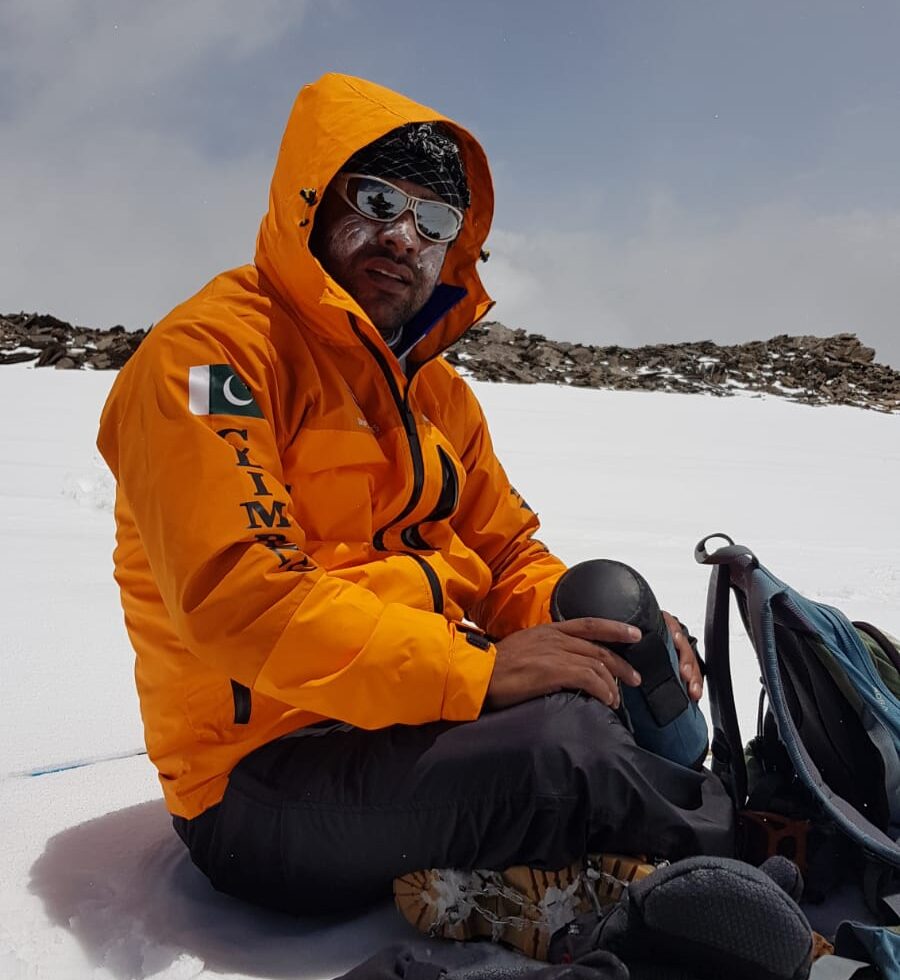 - - Jawad, Pakistan Blogger
I took my family on a guided tour with them, and it was beyond our expectations. The natural beauty of the northern areas was breathtaking, and the team made sure we were comfortable and enjoying every moment. From camping under the stars to hiking scenic trails, it was all perfectly arranged. This trip has left us with unforgettable memories. Thank you for an amazing journey! - Ryō Kaneii Japanese business executive
Absolutely unforgettable! From the moment we set out, everything was perfectly organized. The guides were knowledgeable and friendly, making us feel safe and inspired throughout our trek. Each day was a new adventure, with breathtaking views and expertly planned routes. I can't wait for my next expedition with this team! - - Emma J. Business Owner