
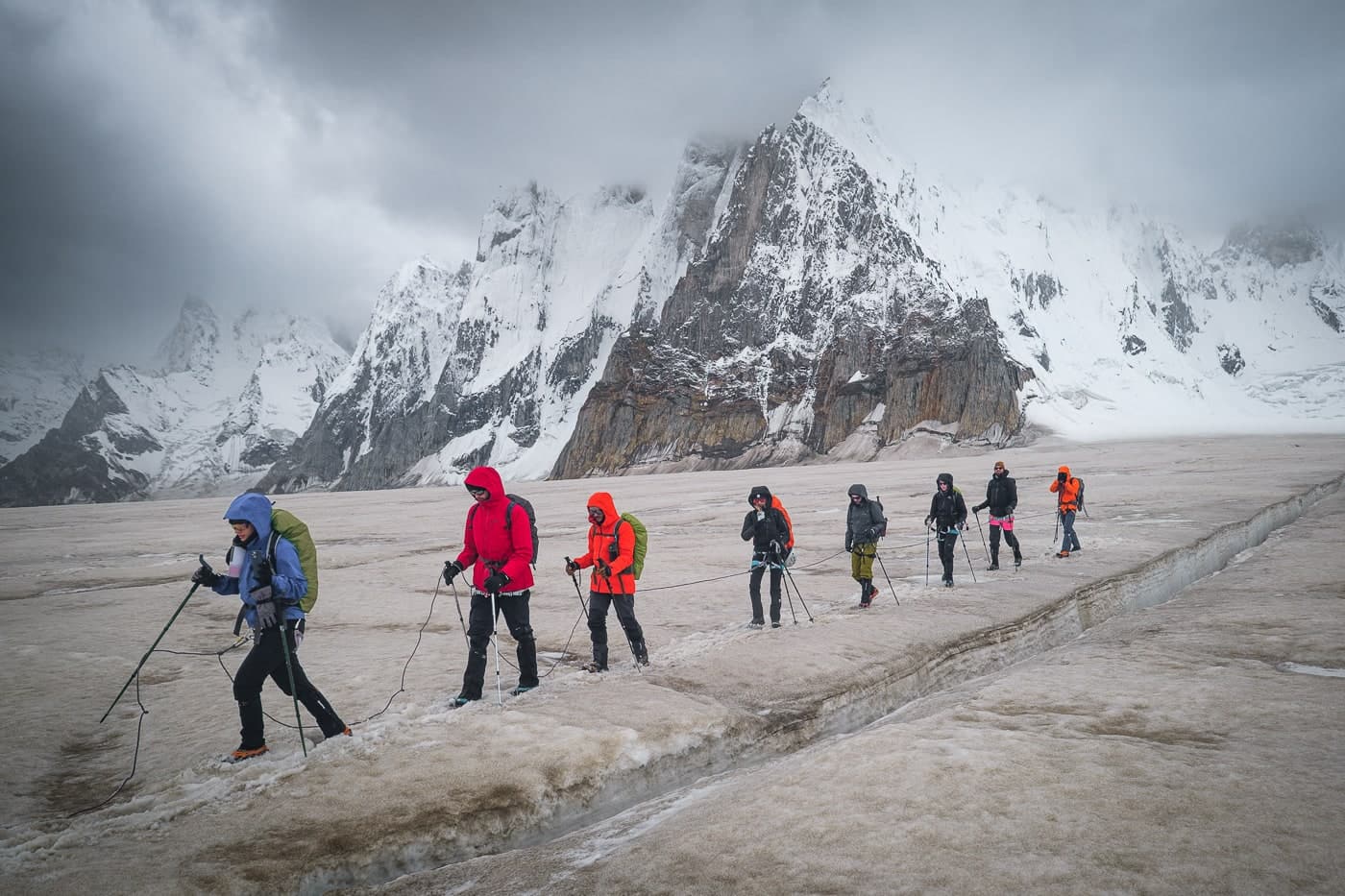
The Snow Lake Trek is one of the most extraordinary trekking adventures in the world, taking explorers deep into the heart of Pakistan’s Karakoram Mountain Range. Known for its untouched glaciers, towering granite peaks, and remote wilderness, this expedition is considered one of the finest glacier treks on Earth. Unlike commercial trekking routes found in many countries, Snow Lake remains wild, isolated, and remarkably pristine, offering experienced trekkers an authentic mountain adventure.
Located in Gilgit-Baltistan, Snow Lake is not actually a frozen lake but a vast glacial basin formed by the convergence of the Biafo and Hispar Glaciers. Covering nearly 1,600 square kilometers, this immense ice field creates a breathtaking landscape surrounded by some of the world’s highest mountains. The journey to Snow Lake challenges trekkers physically while rewarding them with unforgettable scenery, cultural encounters, and a genuine sense of exploration.
Whether you are an experienced mountaineer or an adventure traveler looking for your next challenge, the Snow Lake Trek delivers an unforgettable experience unlike any other.
Where is Snow Lake?
Snow Lake lies in the central Karakoram Range of northern Pakistan within Gilgit-Baltistan. It is situated between the famous Biafo Glacier and Hispar Glacier, creating one of the largest glacial systems outside the polar regions.
The expedition usually begins from Askole, the last permanent village before entering the Karakoram wilderness. Askole serves as the starting point for several famous trekking routes, including the K2 Base Camp Trek and the Snow Lake Trek.
The trail passes through enormous glaciers, rocky moraines, alpine campsites, and dramatic mountain landscapes before reaching Snow Lake itself. Some expeditions continue across Hispar Pass, connecting the Baltistan and Hunza regions.
Why is Snow Lake Famous?
Snow Lake has earned worldwide recognition for its unique combination of natural beauty, remoteness, and adventure.
Unlike popular trekking destinations that attract thousands of visitors each year, Snow Lake remains relatively untouched. Trekkers often spend days walking across glaciers without encountering other groups, making it one of the most peaceful mountain experiences available.
The area is famous for:
- Massive glacier landscapes
- Stunning panoramic mountain views
- Remote wilderness
- Technical glacier trekking
- Rare wildlife
- Crystal-clear alpine scenery
- Incredible photography opportunities
Many experienced trekkers consider Snow Lake one of the greatest glacier expeditions in the world because of its scale and isolation.
The Route to Snow Lake
The classic Snow Lake Trek begins with a jeep journey from Skardu to Askole. From there, trekkers spend several days hiking across the Biafo Glacier toward Snow Lake.
Typical camps along the route include:
- Korofon
- Namla
- Mango
- Baintha
- Marfogoro
- Snow Lake
Each day presents different terrain, including rocky trails, glacier crossings, ice fields, and scenic valleys.
Trekkers gradually gain altitude while adapting to the challenging environment. Upon reaching Snow Lake, visitors are rewarded with breathtaking views of an endless white glacial basin surrounded by towering peaks.
Many longer expeditions continue over Hispar Pass before descending into the Hunza Valley.
Trek Difficulty
The Snow Lake Trek is considered a challenging expedition suitable for experienced trekkers with excellent physical fitness.
Unlike ordinary mountain hikes, this trek involves walking for many hours each day across uneven glacier surfaces, loose rocks, and moraines. Weather conditions can also change rapidly, requiring trekkers to be mentally prepared for varying temperatures and occasional snowfall.
Daily trekking distances typically range between 10 and 18 kilometers, with hiking times lasting six to nine hours depending on terrain and weather.
Proper preparation significantly improves the overall trekking experience.
Best Time to Visit Snow Lake
The ideal trekking season runs from late June through early September.
During these months:
- Snow conditions are more stable.
- Temperatures are relatively moderate.
- Glacier crossings are safer.
- Mountain views are generally clearer.
- Campsites become more accessible.
July and August are particularly popular because they offer the most stable weather, although mountain conditions can never be completely predictable.
Outside the trekking season, heavy snowfall and extreme weather make the route extremely dangerous.
Scenic Highlights
Every stage of the Snow Lake Trek offers spectacular scenery that continually changes throughout the journey.
Trekkers experience:
Endless Glaciers
Walking across the Biafo Glacier is unlike any traditional trekking experience. The glacier stretches for dozens of kilometers, creating an incredible frozen landscape.
Towering Peaks
The Karakoram Range surrounds the trail with dramatic mountains rising over 6,000 and 7,000 meters.
Snow Lake Basin
The highlight of the expedition is the enormous glacial basin known as Snow Lake. Standing in the center of this vast ice field creates an unforgettable sense of scale and solitude.
Ice Formations
Crevasses, ice towers, blue glacial pools, and natural ice sculptures constantly reshape the landscape.
Mountain Sunrises
Early mornings provide spectacular views as golden sunlight illuminates snow-covered peaks.
Wildlife Along the Trek
Although the environment appears harsh, the Karakoram supports a surprising variety of wildlife.
Lucky trekkers may spot:
- Himalayan ibex
- Blue sheep
- Marmots
- Golden eagles
- Lammergeiers
- Snow pigeons
The elusive snow leopard also inhabits parts of the Karakoram, although sightings are exceptionally rare.
Cultural Experience
Before entering the mountains, trekkers spend time in Skardu and Askole, where they experience the warm hospitality of the Balti people.
Baltistan has a rich cultural heritage shaped by centuries of mountain life. Visitors often enjoy traditional Balti cuisine, local customs, and interactions with experienced mountain guides and porters who possess remarkable knowledge of the region.
These cultural exchanges add depth to the overall trekking experience beyond the natural scenery.
Essential Equipment
Proper equipment is essential for a safe Snow Lake expedition.
Recommended gear includes:
- Waterproof trekking boots
- Warm layered clothing
- Down jacket
- Sleeping bag suitable for sub-zero temperatures
- Trekking poles
- Waterproof gloves
- Sunglasses with UV protection
- Sunscreen
- Personal first aid kit
- Headlamp
- Water purification tablets
- Backpack with rain cover
Reliable gear improves comfort and safety throughout the expedition.
Physical Preparation
Preparing several months in advance greatly increases the chances of completing the trek successfully.
Focus on:
- Cardiovascular endurance
- Leg strength
- Core stability
- Long-distance hiking
- Stair climbing
- Backpack training
Regular outdoor hiking while carrying weight helps simulate actual trekking conditions.
Safety Tips
Mountain safety should always remain the highest priority.
Important recommendations include:
- Trek with licensed guides.
- Allow sufficient time for acclimatization.
- Stay hydrated.
- Monitor weather forecasts.
- Follow guide instructions during glacier crossings.
- Carry emergency supplies.
- Respect altitude limits.
- Avoid unnecessary risks.
Professional expedition operators also provide experienced support staff, cooks, and porters to ensure smoother logistics.
Photography Opportunities
Snow Lake offers countless opportunities for landscape photography.
Popular subjects include:
- Massive glacier panoramas
- Reflection pools
- Mountain ridges
- Camps under star-filled skies
- Sunrise over snow-covered peaks
- Ice formations
- Traditional Balti villages
Photographers often consider this trek one of Pakistan’s finest destinations for adventure photography.
Why Choose the Snow Lake Trek?
Few trekking routes combine such dramatic landscapes, true wilderness, and physical challenge in one expedition.
Unlike crowded hiking destinations, Snow Lake provides complete immersion in nature. Every day introduces new glaciers, mountain vistas, and unforgettable scenery while allowing trekkers to disconnect from modern life.
For adventure seekers looking to experience one of Earth’s last great wilderness expeditions, the Snow Lake Trek stands among the world’s greatest glacier journeys.
Conclusion
The Snow Lake Trek is far more than a mountain hike it’s an expedition into one of the planet’s most spectacular glacial environments. From the rugged landscapes of Askole to the immense ice fields of Snow Lake, every step showcases the unmatched beauty of Pakistan’s Karakoram Range. Challenging terrain, breathtaking scenery, rich Balti culture, and the thrill of exploring one of the world’s largest non-polar glacier systems make this journey a dream for experienced trekkers.
With proper preparation, expert guidance, and a spirit of adventure, the Snow Lake Trek offers memories that last a lifetime. Whether your goal is to conquer one of Pakistan’s most iconic expeditions, capture extraordinary mountain photography, or experience true wilderness, Snow Lake promises an adventure unlike any other.